Morton, in Progress
A Year-Long Test of Art, Identity, and the Internet

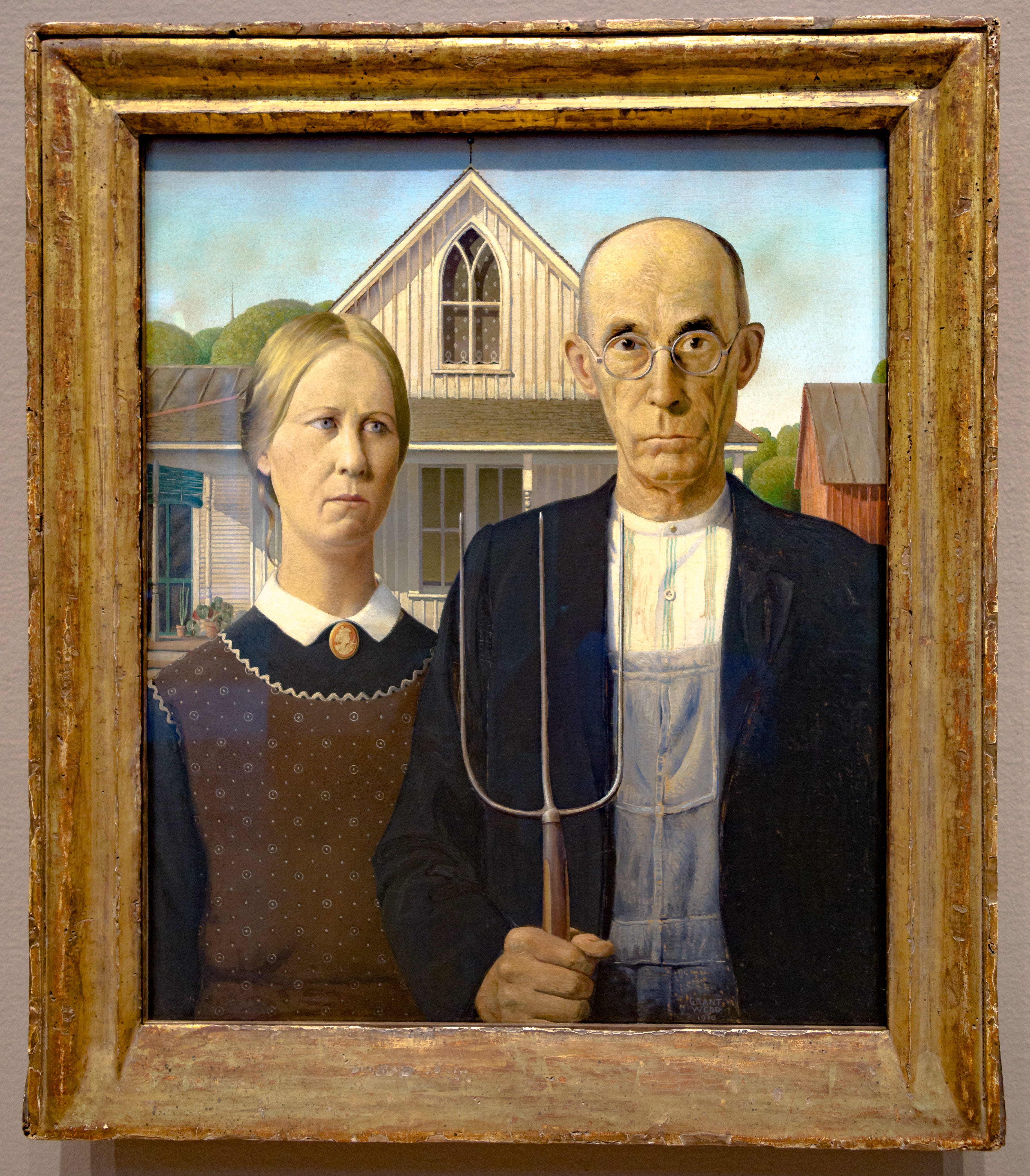
This is it. The launch of my year long art project.
Morton in Progress
I believe the human mind is a powerful tool. Our thoughts shape our lived experience, and our choices give those thoughts weight. Actions are vital, but they begin in the mind. Try raising your arm without first deciding to do it.
What does that say about consciousness?
There’s a term you may be familiar with: the mind body connection. It describes the two-way feedback loop between your mind and your body.
What you think influences how you act, and how you act feeds back into what you think. In essence, it’s about balance.
Across philosophy, psychology, and spiritual traditions, people have tried to describe what that balance looks like in practice. Many of them imply that purpose shows up when your beliefs and actions become aligned.
You may have heard of Ikigai. If not, it’s a Japanese concept often described as the overlap of what you love, what you’re good at, what the world needs, and what you can be paid for.
This project is my attempt to find that balance.
The purpose of this project is simple, yet expansive.
I want to leave the world better than I found it.
I believe a world with more artists and more art is a better world.
Not only because art can influence thought and expand perspective, but because it’s cathartic. When you spend time creating, you learn about yourself in a way that’s similar to contemplation.
While this purpose may seem simple on the surface, it is the culmination of the past three years.
Three years ago, my sense of purpose fell through. I started developing my own philosophy because I’d been burned too many times by attaching my identity to other people’s truths.
At first, it was exciting. I would connect a few ideas and feel like I’d found something real. Then I’d look it up and realize someone else had already built the same idea, sometimes a long time ago.
I used to play MMOs, massive multiplayer online games. In those games you can earn skins. They change how your character looks, but not what your character can do.
That became my lens for philosophy and theology. The core patterns stay the same, but the language and presentation evolve over time.
My background in art history helped. The artists of a time are often exploring the philosophy of their time, whether intentional or not. Their work becomes the way those ideas spread. History remembers the art and the events, but the philosophy underneath them is often forgotten.
In a world where everyone is supposed to be original, I started to question if anything was actually new.
I’m reminded of a story. When I was a kid, a family friend had just gotten his PhD. After his defense, someone he didn’t know recommended a book. When he read it, he realized it contained most of his thesis. The core of the research had already been published before he ever wrote it.
I related to that feeling, but it didn’t discourage me. I still needed to learn ideas for myself first, in a way I could actually understand, so I could recognize the same pattern even when the words changed.
When my thoughts got muddled, I’d go looking for people who had explored the same topics before me. I’d read how they framed it, notice how the idea shifted across time, and check whether the arc of their thinking matched where mine was already headed. Then I’d integrate what mattered and move on.
For about two years, I studied philosophy this way.
A year ago I found metamodernism, and it was the closest modern frame to what I’d been building. It was helpful because it gave me a label other people could recognize.
One thing metamodernism gets right is that culture has become aestheticized.
What this means is that we don’t just live inside ideas and values anymore. We live inside styles that signal our ideas and values. You can see it in how the same belief can read as sincere in one style and performative in another.
This is also something my art seeks to explore. And I’ve begun to think of the internet like a digital globe. You can separate different social pockets on the internet into their own digital nations.
I could describe three different personalities and you could probably guess which digital nations they came from: Facebook, Reddit, or TikTok.
In the same way, a hundred years ago I could list three values and you could probably guess which cultures they came from.
Online, the algorithm rewards clear signals. Through reinforcement, you learn to compress yourself into something recognizable, and that signal becomes your identity to other people as well.
Morton in Progress is also a project about identity. The question “who am I?” is old. Every philosopher ends up there eventually.
The internet adds a new layer. Personal identity is something you can shape. Digital identity is trickier. It gets shaped around you, often by people and systems you don’t control.
A year ago, I answered that question for myself.
Artist.
Identity is not a new topic, but it’s rich and ever evolving. Philosophy is one of the best tools we have for understanding cultural identity.
Where it falls short is in its inability to integrate modern complexity and personal experience.
I call this the binary problem. It’s a very human habit: “this isn’t working, I’ll try the opposite.” Complexity collapses when we force clean separation.
Philosophy has always had a deep attraction to duality. It often describes culture as a swing between opposites.
This works in theory, but it doesn’t survive lived reality. Human belief is rarely consistent. Even our core values can contradict each other.
That makes us heroes and villains depending on who tells the story, and most people don’t know what to do with that uncertainty.
We can look to the Protestant Reformation as an example of this.
When it becomes clear that an institution or nation no longer lives the values it preached, people who feel that dissonance tend to separate and reform under a new banner. The split creates moral clarity, which fits neatly inside a binary system.
We’re seeing a version of that in digital spaces. Twitter’s shift into X wasn’t just a rebrand. It signaled a shift in what the space was for, and led to community migration.
It’s easy to notice in group splits. It’s harder to notice when the split is happening inside you.
You’ve felt this split. It shows up the first time you justify something you know doesn’t align with your values. You tell yourself a story that makes your decision feel reasonable, even necessary.
These are the hypocrisies we all commit without thinking. We say we care about mental health, then reward burnout as character building. We say we want honesty, then punish people for pointing out our flaws. We say we hate exploitation, then keep buying convenience from systems we know are built on it. We rarely do this on purpose. It’s a way of protecting ourselves from internal fractures. We say we want a kinder world, then feed the outrage machine because it feels good to be right.
That’s the internal split. One part of you wants to live by the values. Another part wants comfort, status, safety, and belonging.
For all our progress, we have not transcended our biology. We built structures that hijack our biological systems and reward our behaviors in ways that reinforce them.
Knowledge alone will not solve this tension.
What matters is how we act once we become aware of the systems shaping us.
Most responses fall into familiar patterns. We align with the consensus. We define ourselves against it. Or we try to step away entirely. But all three are reactions. They’re still defined by the thing they respond to.
This project isn’t about standing above the system, it’s about testing whether sincerity is possible inside it.
The internet rewards two familiar roles most. The person who blends in, and the person who fights.
Both are shaped by the space they’re in.
The first blends in by learning the language of the platform. They adopt the tone, the timing, and the opinions that already perform well. They’re not insincere, but they are optimized. Over time, the platform rewards them for being legible and predictable.
The second defines themselves through opposition. They push back, challenge norms, and attack consensus. This can feel bold or courageous, but it’s still reactive. Their identity is built around what they resist, and without the thing they oppose, the role collapses.
Some people try to opt out entirely. But even withdrawal is still a relationship to the system. It’s still shaped by what you’re stepping away from.
All three responses look different, but they’re still reactions. In each case, the system is still setting the terms. The response just moves in different directions.
This helps explain why postmodernism, for all its insight, failed to produce lasting change through outrage.
Outrage doesn’t sit outside the internet’s incentives. It’s one of the responses the platform can reward, which means it keeps us participating, even when we think we’re resisting.
These aren’t new ideas. William Shakespeare said, “All the world’s a stage,” and that still holds. We never stop turning experience into narrative, and narrative into identity.
The human narrative is an old tradition. We didn’t start telling stories when we invented writing. For most of our history, we carried meaning through oral tradition, ritual, and memory. We have always defined what it means to be human through our beliefs, and through how we express those beliefs.
I believe this is the role of art, and why we have no record of human civilizations without art of some form.
Art appears to be a human function, not the cultural luxury we’ve reduced it to.
When I look at social media, I see artists doing what artists have always done: translating their lived experience into something shareable.
Social media is packed with unresolved problems, and a lot of what it rewards is corrosive. And yet, it has made it possible for millions of artists to share their work, and more artists than ever are finding ways to make a living through it.
It’s far from perfect. But it’s still evolving, and it’s starting to look like a reskin of one of the oldest art forms we have records of: busking.
Welcome to the age of the digital busker.
A year ago, I asked myself who I was. I answered: artist.
That answer changed how I lived, and it’s what brought me to this moment.
A good story needs tension. It needs something at stake. Otherwise, what’s the point?
So here’s what I’m actually doing.
For the next year, I’m going to test not only my own beliefs, but the beliefs shaping how we make art and identity online.
In addition to claiming the identity of an artist, I’m becoming a digital wayfarer. Instead of moving from town to town, I’ll move through digital spaces: Substack, LinkedIn, YouTube, Instagram, TikTok.
I expect the communities in each place to feel different, with familiar overlap. I expect the beliefs underneath my work to stay the same, but the content to shift based on where it lives, because each platform rewards different instincts.
I’m not stopping at content. This project is about forging a path that fits, because the roles these platforms reward are too limiting for the kind of work I’m trying to do. Instead of niching down for a platform, I’m going to niche out.
Each channel will be focused. But I’m not building this in one place. I’m spreading the project across platforms, giving each one something it can recognize without letting any one platform flatten me into a single identity.
A lot of my public work will happen on livestreams. I’ll keep a curated record of the project on my website. At the end of the year, that archive will be the art that lives on beyond the experience.
I’m not under the illusion that change happens because I say it will. It happens through momentum. My goal is to turn that momentum into support people can use, so participating in this project actually helps them become better artists.
The stakes are personal and practical. If I can’t do this, then the identity I built over the last year collapses back into theory. If I can’t make it sustainable, then my belief that a modern artist can make a living online becomes a nice idea with no proof. And if I get pulled back into performance, outrage, or optimization, then I’ll have become another product.
By the end of this year, I want to be able to honestly answer one question.
Can a modern artist stay human without becoming a brand?
I’m going all in on this for the next year. But the outcome won’t come from effort alone. It comes from participation, from other artists and creators showing up and shaping the space with me.
These are the easiest ways you can support the project:
If you want to follow my work as it expands beyond Substack, join the Discord. I’m building it as a creative community space where artists can meet and promote the work that matters to them. It’s also the one place I’ll share my work across all platforms for anyone who wants to keep a close eye on new content.
The project also has a website. It’ll always have the core info, links, and contact details, but it’s a repository, not a live feed.
This hit on so many points that align in small or big ways with RoboPulp. The notion of living inside styles that signal our ideas and values is something that grew out of social media, where just about anything can become a cause or course that can be monetized.
One of the driving ideas of RoboPulp is questioning what originality means, and in art being original involves a lot of selective thievery.
I would say that mode of creating has caught online, but it's done with personality itself rather than with a traditional art form.
The artistry in some circles of the web is the creating, altering and manipulating of personas across different platforms.
I'm curious to see where this experiment goes. You pinpointed something unique to online experience.
The digital busker. Yes. We like to think that the internet invented novelty. It didn't. It just provided us with new platforms. Same hat on the ground. Same hope that someone will stop. Same fear that no one will. The difference is that you’re naming the street you’re standing on. That’s the art now. Not the song. It's about being aware of where you're singing it.